Appearance:
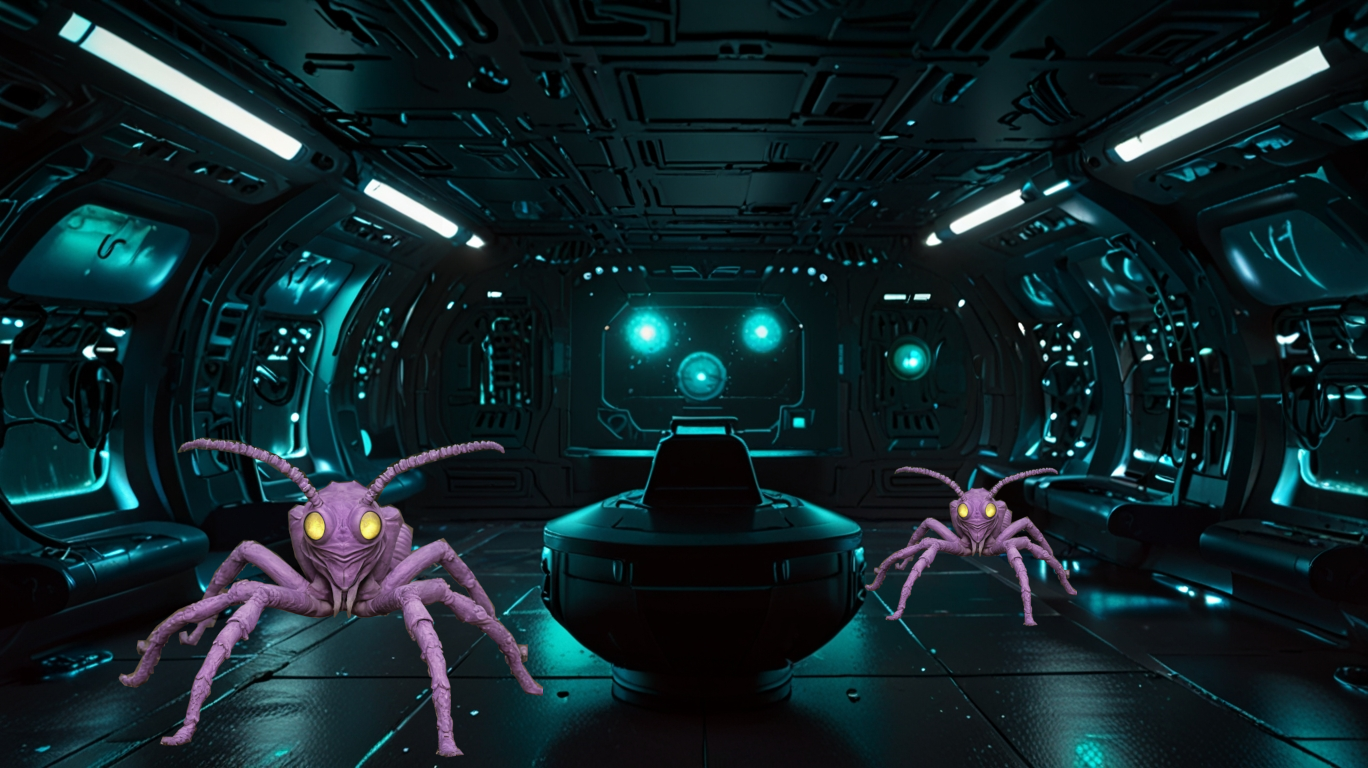
- Color: The creature is predominantly a vibrant shade of purple.
- Eyes: Large, prominent, and glowing yellow eyes give it an otherworldly look.
- Legs: Altarians have multiple jointed legs, similar to those of an insect or arachnid, that appear strong and sturdy.
- Body Structure: The body is segmented, resembling an ant or mantis, with a tough, chitinous exoskeleton.
- Antennae: The creature has two long, segmented antennae extending from its head, which are also purple and textured.
- Mandibles: Some visible mandibles or mouthparts appear to be designed for grasping or chewing.
Senses:
- Visual: Eyes adapted to lower light levels, potentially seeing into the infrared spectrum due to the colder environment.
- Olfactory: Enhanced sense of smell to detect chemical changes in the ammonia-rich environment.
- Tactile: Sensitive skin or appendages to sense pressure and temperature changes.
- Auditory: Hearing is adapted to lower frequencies, given that sound travels differently in ammonia.
|
How Does It Communicate:
- Chemical Signals: They communicate using pheromones or other chemical signals dispersed through the ammonia medium.
- Vocalizations: Low-frequency sounds adapted to travel efficiently in ammonia. This is done by rapidly rubbing two of their limbs together.
- Visual Displays: Color changes or bioluminescence for visual communication in low-light conditions.
What Would It Consume for Fuel:
- Organic Compounds: They would likely consume ammonia-soluble organic molecules.
- Hydrogen and Nitrogen Compounds: Metabolizing hydrogen (H2) and nitrogen-based compounds (NH3, N2) for energy.
What Environments Would Be Deadly to the Life Form:
- High Temperatures: Environments above the boiling point of ammonia (-28°F or -33.34°C) would be lethal, causing rapid evaporation of the solvent.
- Water-Rich Environments: Water would be toxic, disrupting their ammonia-based biochemistry.
- Oxygen-Rich Environments: High oxygen levels could lead to combustion or chemical reactions harmful to ammonia-based life.
Circumstances Where Ammonia Solvent Could Explode or Catch on Fire
- Flammability: Ammonia is flammable when mixed with air in concentrations between 16% and 25% and can ignite if an ignition source is present.
- Oxidizers: The presence of strong oxidizers, such as chlorine or fluorine gases, can lead to explosive reactions.
- High Temperatures: Exposure to high temperatures can cause ammonia to decompose into nitrogen and hydrogen, which could ignite.
|
